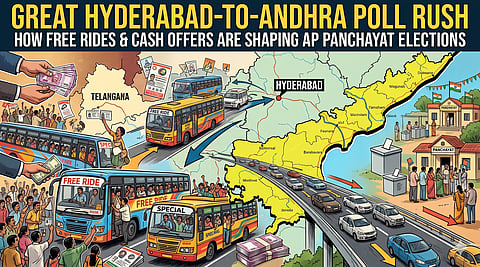

When the fate of an Andhra village is decided hundreds of miles away in Hyderabad’s IT corridors and bustling suburbs, local democracy starts looking a lot like an all-expenses-paid weekend getaway. As thousands of voters journey from Hyderabad to their native villages in Andhra Pradesh, chartered buses and travel allowances have become defining features of the panchayat election season. While supporters view these arrangements as practical ways to boost rural voter turnout, critics and observers raise concerns about how financial incentives may influence grassroots democracy.
As Andhra Pradesh prepares for its three-phase Gram Panchayat elections, the battle for village-level power is increasingly extending beyond the state's borders. Thousands of Andhra voters living in Hyderabad are being approached by local candidates and political groups with offers of free travel, cash incentives and other arrangements to bring them back to their native villages for polling.
With elections scheduled for November 26, November 29 and December 2, 2026, chartered buses, train tickets and travel allowances have become part of the campaign. While some see these arrangements as a convenient way to help migrant voters exercise their franchise, concerns are growing over the alleged use of money and other inducements to influence their choices.
Cash Offers and Luxury Buses to Woo Voters
According to media reports, political organisers from districts such as Krishna, Guntur and Prakasam are reaching out to voters settled in Hyderabad. Their efforts are particularly visible in areas with sizeable Andhra populations, including Kukatpally, Ameerpet, Miyapur and Begumpet. Some organisers are reportedly offering ₹1,000 to ₹2,000 per vote, along with free round-trip travel. Dedicated AC buses are also being arranged for groups of 15 or more voters from the same panchayat. Train tickets, private vehicles and food arrangements are among the other reported incentives.
Why Hyderabad Voters Matter
The growing attention towards Hyderabad-based voters is not without reason. Panchayat elections are often decided by narrow margins, sometimes just a few dozen votes. Thousands of people from Andhra villages work and live in Hyderabad but retain their voter registration in their native places. Their participation can therefore make a significant difference to the outcome. Although Gram Panchayat elections are officially fought on non-party symbols, the political stakes are much higher. Candidates backed by the ruling TDP-Jana Sena alliance and opposition groups are keen to establish their influence at the village level. A victory is often projected as a measure of a party's grassroots strength.
Voters Caught Between Convenience and Pressure
For many Andhra residents in Hyderabad, these election-season approaches bring both convenience and pressure. Some welcome the free transport, which saves them the cost and trouble of travelling long distances. Others reportedly face competing calls and offers from rival groups in their native villages. In several cases, the pressure is not just political. Family relationships, local connections and the influence of village-level leaders also play a role. Some voters feel obliged to return and participate to avoid displeasing relatives or falling out of favour with influential people back home.
EC Under Pressure to Act
The reported cash offers and sponsored transport have also raised questions about electoral fairness. While facilitating voter travel is not automatically illegal, offering money or other benefits in exchange for votes violates election laws. With the final phase of the election notification issued on November 19, 2026, the Andhra Pradesh State Election Commission has directed district administrations and police officials to remain vigilant and ensure peaceful and transparent polling.
As campaigning gathers momentum and polling arrangements take shape, the bigger question is whether village elections will remain a genuine exercise of local democracy or turn into a contest of money, mobilisation and political influence. The response of Hyderabad-based voters, along with the effectiveness of election authorities in checking alleged inducements, could prove decisive in determining who controls Andhra Pradesh's villages.