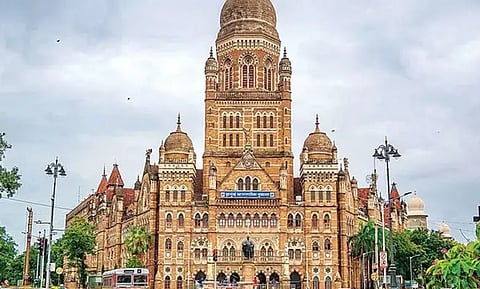

The selection of Mumbai’s next mayor has emerged as the most keenly watched political contest in Maharashtra following the recent Brihanmumbai Municipal Corporation (BMC) elections. Although the ruling Mahayuti alliance- comprising the Bharatiya Janata Party (BJP) and Shiv Sena (Shinde) has secured a clear majority in the 227-member civic body, intense negotiations continue over who will occupy the powerful mayoral chair.
The local body election results indicate a strong mandate, with the BJP as the largest party at 89 seats, followed by Shiv Sena (Eknath Shinde) with 29 seats, forming a majority coalition. In contrast, the opposition, including Shiv Sena (UBT) with 65 seats, Congress with 24, and MNS with 6. This has led to contention in the ruling alliance over the mayor’s position in India's wealthiest municipal body.
The Shiv Sena led by Shinde, advocating for a rotational "2.5-year formula" for the mayor's post, aiming for equitable power-sharing despite being numerically smaller partner in the allaince. The party asserts that alliance dharma necessitates fair power distribution. Meanwhile, the BJP has indicated a preference for a mayor from the Mahayuti and emphasized the importance of projecting the "Hindu-Marathi" leadership figure and identity in alignment with its political narrative in Mumbai.
Adding to the drama, Eknath Shinde has reportedly shifted his 29 newly elected corporators to a luxury hotel in Mumbai as a precautionary measure to prevent poaching or horse-trading from opposition parties amid internal alliance negotiations.
A final decision regarding the mayoral candidate for Mumbai is anticipated only after Chief Minister Devendra Fadnavis returns from the World Economic Forum in Davos, which concludes on January 24, 2026.
Complicating further is the upcoming lottery by the Urban Development Department that sets to determine the reservation category for the mayor's position—options that includes General, Women, or Other Backward Classes (OBC). This procedural decision, expected to take place next week, therefore formal mayoral election is projected to be finalised by the end of January 2026.
Beyond alliance politics, the 2026 BMC elections signify a pivotal shift in Mumbai's political landscape as for the first time over three decades, the Shiv Sena (UBT), has lost its long-held control over the civic body. In response, UBT leader Sanjay Raut has issued a strong statement underscoring that the electoral contest is far from concluded, asserting that "the game has just begun" and implying skepticism about the ability of any party to easily claim the mayoral position.
While Eknath Shinde asserts that there is no internal conflict within the Mahayuti alliance and that the next mayor will be chosen from this coalition, the reality suggests otherwise. The selection process for Mumbai's mayor has evolved into a complex interplay of dynamics, including reservation politics, the arithmetic of alliances, and personal leadership aspirations. The focus is now on the BJP's leadership, particularly after the recent discussions in Davos, which are poised to influence not only the next mayoral appointment but also the overall power dynamics within the Mahayuti alliance.
