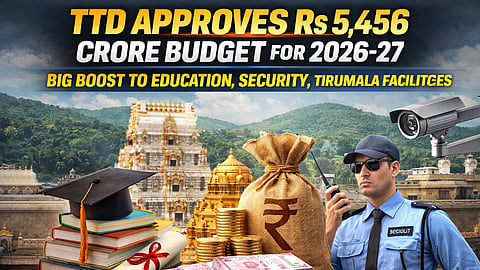

Tirumala Tirupati Devasthanams (TTD) runs the world-famous Sri Venkateswara Swamy Temple in Tirumala, Andhra Pradesh. Year after year, it stands out as one of India’s wealthiest and most efficiently managed religious trusts. On February 28, 2026, the TTD Trust Board signed off on a record budget of Rs 5,456. That’s a bump up from last year’s Rs 5,394.52 crore, thanks to more pilgrims, stronger prasadam sales, and tight financial stewardship. TTD juggles two big jobs. It keeps ancient temple traditions alive, but it also pours huge resources into charity, education, and infrastructure—what it calls Dharma Prachar, or the spread of Dharma. The trust funds free meals (Annadanam), hospitals, schools, cow protection, and a broad campaign to promote Vedic knowledge and Hindu philosophy.
Revenue: Faith at the Core
TTD’s money mostly comes from the faithful. Devotees, not the government, keep the trust running. Their donations—the heart of the operation—fuel everything else.
Here’s how TTD expects to make its money in 2026-27:
- Hundi collections (the classic temple donation boxes): Rs 1,880 crore. That’s up Rs 142 crore from last year, showing more people are visiting and giving.
- Interest from bank deposits and investments: Rs 1,205 crore. The trust’s corpus funds generate solid, stable income.
- Prasadam sales (think the iconic Tirumala Laddu): Rs 650 crore. In 2025, devotees snapped up more than 13.5 crore laddus—a ten-year high. Daily production hovers around 4 lakh, sometimes surging to 10 lakh on festival days.
- Darshan ticket sales (special entry and paid darshans): Rs 310 crore.
- Arjitha Seva or service tickets: Rs 135 crore.
- Hair offerings (Talaneelalu): Rs 175 crore. Tonsuring remains a major tradition—and a steady revenue stream.
- Accommodation and kalyana mandapam rentals: Rs 173 crore.
Even after a rough patch—like the 2024-25 laddu quality controversy—TTD bounced back. Improved quality in 2025 pulled prasadam sales to new highs, proving the trust’s resilience.
Spending: Between Tradition and Welfare
TTD’s budget splits between temple upkeep, pilgrim amenities, administration, and its Dharma Prachar programs. Payroll is the biggest ticket—almost as much as hundi income.
Here’s where the money goes in 2026-27:
- Salaries and staff allowances: Rs 1,859.75 crore. That’s everyone—priests, security, behind-the-scenes staff—who keeps the temple running daily.
- Raw materials (prasadam ingredients, flowers, and more): Rs 974.50 crore.
- Corpus and investments: Rs 700 crore into fixed deposits and similar instruments.
- Engineering works (roads, buildings, and infrastructure): Rs 475 crore.
- Non-engineering capital works: Rs 81 crore.
- Maintenance: Rs 301 crore in total (engineering repairs, facility management, other upkeep).
A Few New Priorities Stand Out
- Upgrading TTD’s own educational institutions: Rs 118.89 crore for smart classrooms, hostels, and similar improvements.
- A modern kitchen complex: Rs 124 crore—Annadanam at a whole new scale.
- Security: more guards—356 in Tirupati, 371 in Tirumala (many from the Army Welfare Placement scheme).
-Special projects: building a 108-foot Jambavantha statue on Dry Island (Rs 20.17 crore), new PA systems and LED displays (Rs 4.2-4.25 crore), and ramped-up support for affiliated trusts.
Dharma Prachar: Giving Back, Spreading Good
A huge chunk of TTD’s spending goes straight into philanthropy and spreading Dharma:
- Sri Venkateswara Annadanam Trust: free meals for millions of pilgrims, every single day.
- Health care through the Sri Balaji Aarogya Varaprasadini Scheme and BIRRD Hospital.
- Education, thanks to the SV Vidyadanam Trust.
- Cow protection under the SV Gosamrakshana Trust.
- Vedic schools, publishing, outreach—TTD puts serious resources behind Sanatana Dharma, both in India and abroad.
Donations to these trusts—Rs 918.6 crore came in between November 2024 and October 2025, both online and offline—go straight into funding these activities.
TTD keeps running on this self-sustaining cycle: the faith of millions turns into real social impact. Even as Andhra Pradesh politics heats up, and the temple faces its share of scrutiny, the latest budget keeps the mission steady—focusing on transparency, making things easier for pilgrims, and spreading dharma. Tirumala stands out, not just as a wealthy temple, but as a benchmark in blending spiritual purpose with public good.
