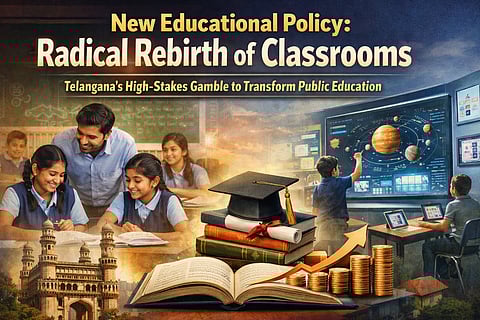

Telangana is turning a new page in its development, and its proposed “Education Policy for Telangana 2026: Vision for Inclusive Excellence” stands out as a real break from the past. Instead of treating education like an afterthought, the state is pushing it to the center of its agenda. The plan calls for a dramatic increase in funding—jumping from 9% to 18% of the state budget, shifting education from a routine expense to a core investment. Let’s break down the major recommendations that could set Telangana apart:
1. Doubling the Education Budget to 18%
The policy doesn’t just suggest a minor boost; it demands doubling the current allocation to at least 18% of the total state budget, with 5% ring-fenced just for higher education. What’s different here? The money isn’t going to get swallowed up by salaries and pensions. Instead, it’ll be tied directly to infrastructure and maintenance—actual needs on the ground.
2. The “Telangana Public School” Model
To stop parents from fleeing to private schools, the new model proposes large, well-equipped campuses that offer classes from nursery through Grade 12—all under one roof. By consolidating resources, these schools can tackle teacher shortages and the problem of multigrade classrooms. Free transportation will also bring rural students into the fold, making school truly accessible.
3. Overhauling Boards and Exams
The stress and bureaucracy of multiple boards and high-stakes exams have weighed students down for years. Telangana plans to merge the SSC and Intermediate Boards into a single Telangana Secondary Education Board. It will drop the Intermediate first-year public exam and discontinue the EAPCET (formerly EAMCET) entrance test, moving away from relentless testing. Raising the minimum pass mark from 35% to 45% aims to boost real learning, not just scores on paper.
4. Regulating Private Schools
Private schools won’t get a free pass. The new Private School Fee Regulation Bill will categorize schools—like budget schools—to keep fees clear and affordable. At the same time, junior colleges will no longer be allowed to offer integrated competitive exam coaching, which narrows the private sector’s influence over entrance exam prep.
5. Bringing in Early Childhood Education (ECE)
Private schools have had the upper hand by enrolling kids at the nursery level. Telangana plans to counter this by adding pre-primary sections to government schools, starting kids in the public system at age 3 and ensuring a smooth transition to formal schooling.
6. Digital Transformation: “Telangana Digital Shala”
The policy lays out a three-phase digital plan (EdTech Roadmap 2035). Teachers will get training and micro-certification to become digital innovators. Students will have digital learner record wallets, using AI dashboards and blockchain-like technology to track progress and credentials.
7. Integrated Residential Schools for True Inclusion
The CURE initiative is building integrated residential schools on sprawling 25-acre campuses. Unlike the current Gurukuls, which separate students by caste or community, these new schools bring SC, ST, BC, and minority students together. The aim is real social inclusion—a genuine sense of equality.
Why is this different?
While the National Education Policy (NEP) 2020 sketches a broad outline, Telangana’s draft policy dives into specifics. It doesn’t just talk about reforms—it puts real legislative power behind ideas like fee regulation and scrapping entrance exams. By treating education spending as a protected investment, exempt from borrowing limits, Telangana is setting itself up as a proving ground for public education reforms.
