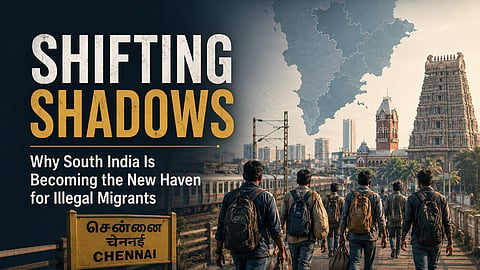

A subtle but impactful shift is underway in India—one you won’t find making daily headlines, but it’s changing the very fabric of the southern states. As Assam and West Bengal crack down harder on illegal immigration, another story is unfolding: undocumented migrants from Bangladesh Muslims and Myanmar’s Rohingya community are drifting south. Cities across Telangana, Tamil Nadu, and Karnataka have become magnets for these new arrivals, not so much because of any grand design, but because they offer just what these migrants need—anonymity, abundant jobs that don’t ask too many questions, and an easy way to melt into the urban crowd.
The Great Southern Shift
For a long time, discussions about illegal immigration in India always centered on states hugging the eastern and north-eastern borders—Assam, West Bengal, Tripura. The logic was simple: proximity invites trouble. But those states started tightening their borders, ramping up patrols, and conducting surprise checks. That’s forced human trafficking syndicates to rethink their routes. The result- migrants are taking long cross-country train journeys to reach the South, where they know the rules are laxer, the demand for cheap labour is insatiable, and nobody is likely to look twice at a stranger.
But why do they pick South India, of all places? The answer lies in the region’s sprawling industrial sector and its vast, informal job market. Textile mills, construction projects, hospitality, and a host of other industries always seem short on hands. These migrants are often speaking Bengali and pretending to be domestic workers from West Bengal, fit right in. Employers rarely bother checking identities. For the undocumented, it’s as simple as finding a job and keeping their heads down. But most don’t just come and go—they settle. With the help of local agents, they arrange for fake Aadhaar cards, ration cards, and voter IDs, giving them the leverage to dip into government subsidies and support that are supposed to be reserved for Indian citizens. It’s a system that’s become disturbingly efficient.
Numbers Speak: Recent Crackdowns
Authorities aren’t entirely oblivious. Police and intelligence units have started to respond more aggressively, launching joint sweeps and surprise checks. In Telangana, Hyderabad’s Old City and some industrial zones have become focal points in this new migration map. Political leaders and security agencies have sounded alarms about a rapidly growing Rohingya population living illegally in these neighbourhoods. Just recently, police picked up seven Bangladeshi nationals in Jeedimetla, a bustling industrial area of Hyderabad. Investigations showed they’d settled in comfortably, equipped with forged Indian documents.
The story repeats itself in Tamil Nadu, especially in the so-called “West Zone.” This region, anchored by Coimbatore, Tiruppur, and Erode, is a powerhouse for textiles and manufacturing. And lately, it’s seeing an unprecedented spike in illegal migrants. In 2025 alone, police detained 103 Bangladeshi nationals in this industrial belt—a staggering jump from just 35 the previous year. In Tiruppur, officers caught 26 Bangladeshis working as labourers with fake Aadhaar cards. In Erode, 18 were convicted and sentenced to two years of rigorous imprisonment for lacking valid documents.
The Transit Route…
Most of these migrants arrive by train—still the cheapest and least conspicuous way to cross the length of the country. The Railway Protection Force (RPF) says it’s nabbed over 900 illegal migrants since 2021, including 586 Bangladeshis and 318 Rohingyas, many intercepted en route to southern cities. The numbers are likely only the tip of the iceberg.
Security and Economic Red Flags
This issue isn’t just about paperwork or who’s entitled to a subsidy—there are far-reaching security and economic consequences. Intelligence agencies warn that letting large numbers of undocumented migrants settle unchecked opens the door for criminal syndicates or even sleeper cells to take root. The fact that foreigners can so easily pick up official Indian identification raises fundamental questions about national security.
On the economic front, when migrants are desperate, they’re willing to work for wages local workers would never accept. Employers love it, but the long-term effect is devastating: local laborers lose jobs or are forced to accept pay cuts, and the social safety net gets stretched thin. State welfare schemes, specifically intended for citizens, get hijacked by migrants carrying fake IDs and ration cards, turning a policy meant for the most vulnerable Indians into an unmanaged financial burden.
How Authorities are Hitting Back
The southern states don’t want to get blindsided. They’re stepping up enforcement and tightening the system:
Special Detention Centers: Hyderabad and several towns in Tamil Nadu—Tiruchi, Cheiyyar, Attur—now have special holding centers where foreign nationals caught without papers wait as their deportation is processed.
Deportation Drives: Tamil Nadu authorities have begun putting arrested Bangladeshi migrants on trains back to West Bengal, where the Border Security Force handles their return. Just recently, 33 Bangladeshi detainees made that journey—under heavy police escort.
Strict Rules for Landlords: Anyone running a hotel, hostel, or rental property now must check tenant IDs and inform the police about any foreign nationals within 24 hours. Those who ignore the directive risk prosecution.
Striking a Difficult Balance
South India’s modern economy clearly depends on waves of migrant labour. But the reality is, the very openness that bakes opportunity into the region is also opening up security vulnerabilities. Governments here can’t afford to ignore the problem any longer. As authorities race to keep up, balancing economic growth with national security is shaping up to be one of the toughest – and most urgent – challenges facing southern India today.
