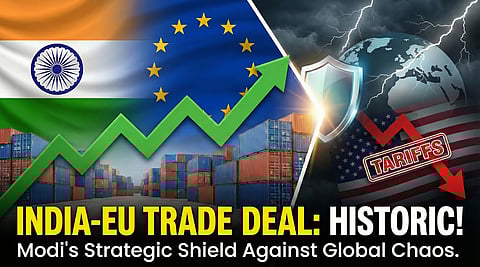

In a significant diplomatic and economic triumph, India and the European Union have successfully concluded a comprehensive Free Trade Agreement (FTA), a deal lauded by Prime Minister Narendra Modi as a pivotal moment for India's economic future. The agreement, years in the making, comes at a crucial juncture, offering India a strategic hedge against ongoing global trade volatilities, particularly in the shadow of persistent US trade tariffs.
Prime Minister Modi, addressing a joint press conference with EU leaders, emphasized the multifaceted benefits of the agreement. "This is not merely a trade deal; it is a testament to our shared values, our commitment to open and fair trade, and a strategic partnership that will propel India's growth for decades to come," he stated. He highlighted the "unprecedented market access" for Indian goods and services across the 27-nation bloc, a market representing over 450 million consumers and a colossal economic output.
The Prime Minister underscored the immediate advantages for several key Indian sectors. Textiles, pharmaceuticals, automotive components, and agricultural products are expected to see a significant boost, benefiting from reduced tariffs and streamlined customs procedures. "Our farmers, our artisans, our small and medium enterprises – they are the true beneficiaries of this agreement. They will now have a direct pathway to the world's largest single market," Modi declared, projecting a surge in exports and job creation across the country.
The timing of this landmark deal is particularly pertinent given the ongoing dynamics of international trade. The past decade has witnessed a rise in protectionist sentiments, most notably from the United States, which has utilized tariffs as a key tool in its trade policy. India, like many other nations, has experienced the ripple effects of these measures, prompting a proactive search for diversified trade partnerships.
Analysts view the India-EU FTA as a shrewd strategic move by New Delhi to de-risk its export strategy and reduce over-reliance on any single market. "The EU deal provides a crucial alternative export destination and a powerful counter-balance to potential disruptions from US trade policies," explains Dr. Meera Singh, a professor of international trade at Jawaharlal Nehru University. "It mitigates the impact of existing and future US tariffs by opening up a massive, stable market that shares India's commitment to multilateralism."
The agreement is expected to foster greater foreign direct investment (FDI) from Europe into India, especially in advanced manufacturing, renewable energy, and digital technologies. European companies, seeking to diversify their supply chains and tap into India's growing domestic market, will find the new trade framework highly attractive. This influx of investment and technology transfer is anticipated to further bolster India's "Make in India" initiative and enhance its global competitiveness.
Furthermore, the FTA includes robust provisions on intellectual property rights, sustainable development, and labour standards, aligning India with global best practices and enhancing its image as a responsible trading partner. This commitment to higher standards is also seen as a crucial element in attracting high-value investments and facilitating integration into global value chains.
While the benefits are significant, challenges remain. Indian industries will need to adapt to rigorous EU standards and face increased competition from European counterparts in the domestic market. However, the government has expressed confidence in the resilience and adaptability of Indian businesses. "This agreement will push us to innovate, to improve, and to truly become 'Vishwa Guru' – a world leader – in manufacturing and services," Modi affirmed.
In essence, the India-EU FTA represents more than just an economic agreement; it is a strategic declaration of India's intent to forge deeper alliances, diversify its global economic footprint, and navigate the complexities of a multi-polar world with confidence and foresight. As the global trade landscape continues to evolve, this deal solidifies India's position as a vital player, ready to leverage new partnerships for sustained growth and prosperity.
