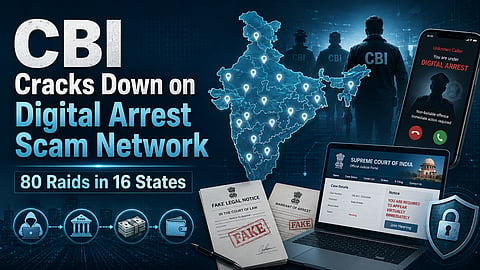

The Central Bureau of Investigation just pulled off one of its biggest sweeps against cybercrime gangs running “digital arrest” scams. Under Operation Chakra-VI, teams fanned out to more than 80 spots across 16 states, including Telangana, Andhra Pradesh, Karnataka and Tamil Nadu from South Region—tracking a web of shell companies, mule banking accounts, fake legal documents, and even a phony Supreme Court website.
What Are Digital Arrest Scams?
These scammers specialize in tricking people into believing they’re in deep legal trouble. They call or send official-looking notices, impersonating police, CBI agents, customs officers, or even judges. Victims get told they’re under investigation for something serious—money laundering, drug trafficking, or financial fraud. Then the threats escalate. Suddenly, you’re facing “arrest” unless you hand over cash for “verification” or “investigation.” Some people have been kept on video calls for hours, worn down by nonstop psychological pressure until they transfer money.
To pull this off, the network built a complex system. Shell companies and mule accounts helped them hide and move money—sometimes nearly Rs 2 crore passed through just these channels. Mule accounts, as investigators explain, are bank accounts used by criminals to push stolen funds around and erase the real identities behind the cash.
The Fake Supreme Court Website Discovery
The CBI’s teams didn’t just shut down these scam networks—they also discovered a fake Supreme Court website designed to convince victims their cases were legitimate. This wasn’t a low-effort clone. It had documents and orders that seemed to come from official sources. The scam came to light after the actual Registry of the Supreme Court filed a complaint, prompting the CBI to open a formal investigation. It’s a bold move—scammers know people trust big institutions, so they weaponized that trust to make their threats believable.
How Did Investigators Track the Network?
To coordinate such a massive crackdown, the CBI formed 60 special teams, raiding spots in Punjab, Gujarat, Delhi, Maharashtra, Haryana, Tamil Nadu, Telangana, Andhra Pradesh, Uttar Pradesh, Madhya Pradesh, Rajasthan, Assam, West Bengal, Manipur, Karnataka, and Odisha. Their evidence haul included stacks of fake documents, digital devices, phones, and banking logs. Forensics experts are now digging into this trove to unmask more suspects, map the money trails, and see just how big this operation really is.
But there’s another twist—this scam went global. Investigators found evidence the same operation targeted people in other countries. The CBI’s sharing information with foreign law enforcement to widen the net even further.
What Was Seized During the Searches?
Digital arrest scams aren’t just embarrassing—people lose their savings, their peace of mind. The speed and reach of these scams make them one of the fastest-growing cyber threats in the country. Operation Chakra-VI is a big move, showing both the scale and audacity of these networks. Law enforcement is fighting a tough battle, with criminals constantly evolving their methods, hopping across state lines and even beyond India. Officials say they’re determined to break the backbone of these scams and bring everyone behind them to justice. More evidence, more arrests, and—hopefully—fewer victims left in the crosshairs of these intimidating cons.
