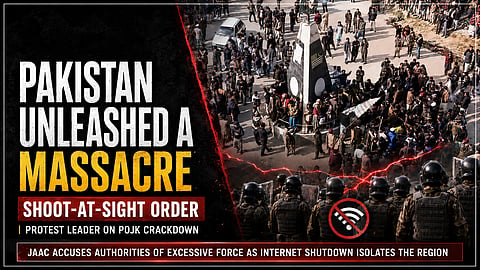

Political tensions are escalating in Pakistan-occupied Jammu and Kashmir (PoJK) as a growing protest movement clashes with state authorities over demands for greater political rights and regional autonomy. The ongoing demonstrations, led by the Joint Awami Action Committee (JAAC), have triggered a strong response from security forces, further intensifying unrest across the region.
JAAC leaders have accused the authorities of using excessive force against protesters. Shaukat Mir, a prominent leader of the movement, alleged that security personnel opened fire on demonstrators in Rawalakot and targeted activists participating in what he described as a peaceful and unarmed campaign for basic civil and political rights.
According to Mir, the movement has remained non-violent and has focused solely on issues affecting local residents. He questioned the government's decision to label activists as extremists, arguing that officials had previously engaged in dialogue with the same groups. JAAC leaders maintain that their campaign is centered on securing democratic rights rather than challenging Pakistan’s sovereignty or state institutions.
The confrontation comes amid reports of a wider crackdown on demonstrations across PoJK. Official accounts indicate that multiple fatalities and injuries have occurred during clashes involving protesters and law-enforcement personnel. However, protest organizers claim the actual number of casualties may be significantly higher than publicly reported figures.
Authorities have also suspended internet and communication services in several areas, limiting the flow of information and making independent verification of developments on the ground increasingly difficult. Additional security personnel have reportedly been deployed to restore order and prevent further escalation.
At the heart of the dispute is JAAC’s demand to abolish 12 legislative seats reserved for refugees from Jammu and Kashmir who settled in mainland Pakistan after 1947. The organization argues that these seats allow national political parties to exert disproportionate influence over regional governance. Protest leaders contend that removing the reserved seats would strengthen local representation and enhance the region’s political autonomy.
The movement has called for a region-wide strike to increase pressure on the authorities. The latest wave of protests coincides with preparations for upcoming elections, adding a significant political dimension to the crisis. Meanwhile, the government recently imposed restrictions on JAAC under anti-terror legislation, a move that has further sharpened tensions between protesters and the administration.
