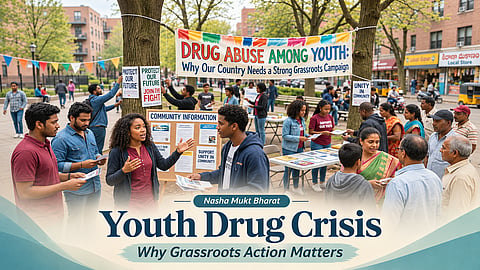

The growing use of drugs and other intoxicating substances among young people has become a serious social concern in both Telangana and Andhra Pradesh. What was once largely associated with certain urban groups is now spreading into smaller towns, educational institutions and rural communities. Against this backdrop, Union Minister G. Kishan Reddy’s three-day ‘Hyderabad Walks for Nasha Mukt Bharat’ campaign assumes significance. The initiative sends an important message that the fight against drugs cannot be left to the police alone. Parents, teachers, educational institutions, community organisations and local governments must also become part of the effort.
The campaign also brings attention to the need for sustained public awareness, early identification of addiction and better rehabilitation facilities. Drug abuse is not merely a law-and-order issue. It affects the health, education, employment prospects and future of an entire generation. Telangana and Andhra Pradesh need similar campaigns that reach beyond major cities and create awareness at the village and mandal levels.
A growing threat to the younger generation
Academic pressure, unemployment, changing lifestyles, peer influence and easy access to intoxicating substances are among the factors that can push young people towards drug use. Students living away from their families, young professionals and vulnerable sections of society are particularly exposed to these risks. Hyderabad, with its large student population, IT workforce and expanding nightlife, has emerged as an important focus area for anti-drug enforcement. Visakhapatnam, Vijayawada, Guntur, Tirupati, Warangal and other growing urban centres also need closer attention. The reported rise in treatment cases at Hyderabad's Institute of Mental Health is another reason for concern. However, the available estimates of drug consumption among youth should be examined carefully, as reliable state-wide surveys are needed to establish the actual scale of the problem.
One major challenge is that many families hesitate to seek help because of social stigma. Addiction is often treated as a personal failure rather than a condition requiring medical and psychological support. This delays treatment and makes recovery more difficult.
Drug Networks Under the Scanner
While awareness campaigns focus on reducing demand, enforcement agencies must continue their efforts against the networks supplying drugs. Both states have established specialised anti-narcotics units. Telangana's EAGLE Force, which succeeded the Telangana Anti-Narcotics Bureau, and Andhra Pradesh's EAGLE unit are working to identify trafficking networks, intercept supplies and take action against drug-related activities. Ganja remains a major challenge, particularly because of cultivation and trafficking networks connected to the Andhra-Odisha Border (AOB) and Agency areas. Large consignments are transported through road networks, often using concealed compartments and modified vehicles. From there, supplies can move towards cities and other states. Synthetic drugs such as MDMA and cocaine present a different challenge. Their supply networks often involve interstate connections, organised dealers and, in some cases, online platforms. Urban party circuits, college-going youth and sections of the working population are among the groups that enforcement agencies need to monitor.
The misuse and illegal sale of pharmaceutical drugs are equally worrying. Prescription medicines and sedatives, when diverted from legitimate medical use, can become easily accessible to vulnerable consumers. Such cases require strict monitoring of pharmacies, distribution channels and illegal suppliers. Police action has resulted in several major seizures. Hyderabad police registered 363 narcotics cases and seized drugs valued at approximately ₹22.17 crore between July 2024 and June 2025, according to the figures cited in recent reports. Telangana also reported substantial statewide seizures during 2024.
However, seizures alone cannot measure the success of the anti-drug campaign. Authorities must also examine how effectively they are dismantling the financial networks, identifying repeat offenders and preventing fresh supplies from reaching consumers.
Legal Action Must Target Oganised Networks
The Narcotic Drugs and Psychotropic Substances (NDPS) Act, 1985, provides the principal legal framework for dealing with drug-related offences in India. It prescribes different punishments depending on the substance, quantity involved and nature of the offence. For offences involving commercial quantities, the law provides stringent punishment, which can extend to 10–20 years of rigorous imprisonment, along with substantial fines. Section 37 also places strict conditions on granting bail in specified serious offences involving commercial quantities.
Authorities can also take action against properties and financial assets connected to illegal drug trafficking, subject to the applicable legal procedures. The objective is to ensure that action does not stop with street-level sellers but reaches the larger networks financing and organising the trade. At the same time, investigations and prosecutions must follow proper legal procedures. Evidence collection, search and seizure procedures, forensic examination and compliance with statutory safeguards are essential to ensure that cases stand up in court. The law also recognises the importance of rehabilitation. Under Section 64A of the NDPS Act, eligible addicts charged with certain offences involving small quantities may receive immunity from prosecution if they voluntarily undergo de-addiction treatment and fulfil the statutory conditions. This provides an opportunity to address addiction through treatment rather than punishment alone.
Why Telugu States Need a Joint Campaign
Drug trafficking does not stop at state borders. The geographical connection between Andhra Pradesh and Telangana, their shared transport corridors and links with neighbouring states make cooperation between enforcement agencies essential. Both governments should develop a coordinated strategy involving police departments, intelligence agencies, educational institutions, health departments and local administrations. Schools and colleges should organise regular awareness programmes, counselling sessions and discussions involving doctors, recovered addicts and trained experts. Instead of limiting awareness to occasional rallies, educational institutions should make drug prevention a continuous activity.
In rural areas, awareness campaigns must reach gram panchayats, government schools, youth associations, self-help groups and community organisations. Local leaders, teachers and healthcare workers can play an important role in identifying early signs of substance abuse and guiding affected individuals towards treatment. There is also a need to strengthen de-addiction centres, rehabilitation services and psychological counselling facilities. Families should have access to professional guidance without fear of social embarrassment or discrimination.
Awareness Rallies to a People's Movement
Kishan Reddy's Hyderabad campaign can provide an opportunity to build a wider public movement against drug abuse. But the real impact will depend on what follows the three-day programme. Telangana and Andhra Pradesh should consider launching a coordinated, long-term anti-drug awareness drive covering every district. Dedicated helplines, school-level prevention programmes, community counselling centres and regular monitoring of vulnerable areas should form part of the strategy.
The governments must also ensure that anti-drug operations target major suppliers, organised traffickers and those financing the illegal trade, while young people struggling with addiction receive timely medical assistance. Ultimately, the fight against drugs requires two equally strong approaches: strict action against those who manufacture, transport and sell illegal substances, and compassion towards those who have become addicted and need help to recover. A drug-free society cannot be built through police action alone. It requires informed families, responsible institutions, active communities and sustained government commitment. For Telangana and Andhra Pradesh, protecting young people from addiction must become a shared social responsibility rather than an occasional political or public awareness campaign.